

Hey there! As a supplier of skid steer machines, I often get asked a bunch of questions, and one that pops up pretty frequently is, “Can a skid steer machine be used on slopes?” Well, let's dive right into this topic and break it down.
First off, what exactly is a skid steer machine? For those who aren't in the know, a skid steer is a small, versatile construction vehicle. It's got four wheels, and each side can be driven independently. This means it can turn within its own footprint, which is super handy in tight spaces. You'll usually find these machines on construction sites, farms, or doing landscaping work.
Now, let's talk about slopes. Slopes can be a real pain in the you - know - what when it comes to operating heavy machinery. Different slopes have different challenges. A gentle slope, say one with a grade of up to 10%, is generally more manageable. On these slopes, a skid steer can often work just fine. The key here is to make sure the machine is stable and that the operator is following some basic safety guidelines.
For starters, the weight distribution of the skid steer is crucial. These machines are designed with a low center of gravity, which helps with stability. But when you're on a slope, you need to be extra careful. Make sure any attachments or loads are balanced evenly. If you've got a heavy load on one side and you're going up or down a slope, it can throw the whole machine off balance, and that's a recipe for disaster.
Another thing to consider is the type of terrain on the slope. If it's moist, muddy, or covered in loose gravel, the skid steer's wheels (or tracks, if it's a tracked skid steer) might not get enough traction. This can lead to slippage, which is not only dangerous but can also damage the machine. In cases like this, you might want to think about using skid steers with tracks instead of wheels. Tracks generally provide better grip on uneven and slippery surfaces.
Tracked skid steers are like the Swiss Army knives of the skid steer world. They're more expensive upfront, but they can handle a wider range of terrains, especially slopes. They distribute the machine's weight over a larger area, which reduces the risk of the skid steer sinking into soft ground. If you're going to be working on slopes a lot, investing in a tracked skid steer could be a smart move.
But what about steeper slopes? Once you get into slopes with a grade of over 15% or so, things get a lot trickier. On these steeper slopes, the risk of the skid steer tipping over increases significantly. It's not impossible to use a skid steer on a steep slope, but it's definitely not for the faint - hearted or inexperienced operators.
When operating on a steep slope, the operator needs to be extremely cautious. They should always drive straight up and down the slope. Making turns on a steep slope can cause the machine to lose balance quickly. And if you're going down a steep slope, you need to use the brakes gently and evenly to avoid a sudden, uncontrolled slide.
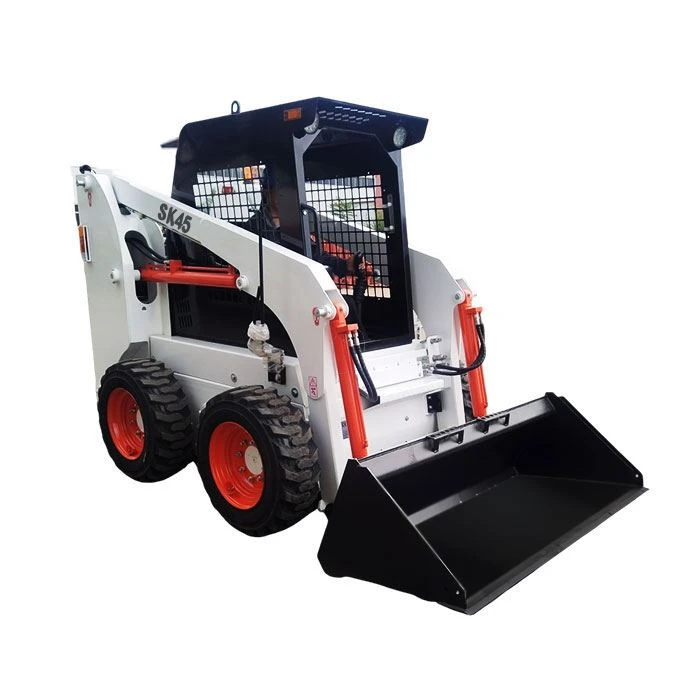
Now, let me tell you about some of the skid steer machines we offer. We've got a great selection, including the Black Skid Steer. This bad boy is built tough and is designed to handle a variety of tasks, whether it's on flat ground or gentle slopes. It's got a reliable engine and excellent maneuverability.
If you're looking for something brand new, check out our New Skidsteer Loader. It comes with all the latest features and technology, which can make operating on slopes a whole lot easier. From advanced traction control to improved stability systems, it's designed to keep you safe and productive.
And for those big jobs, we have the Large Skid Steer Loader. This machine has more power and a larger carrying capacity. It can handle heavier loads and is suitable for more demanding slope work, as long as it's used by an experienced operator and safety precautions are taken.
In addition to the type of skid steer and the slope gradient, the attachments you use also play a role. Some attachments, like buckets or forks, are relatively easy to use on slopes. But others, like some specialized cutting or digging tools, might make the machine less stable. So, before you attach anything, think about how it will affect the skid steer's balance and traction on the slope.
Training is also a big deal. All operators using skid steers on slopes should have proper training. They need to know how to check the machine before use, how to operate it safely on different slopes, and what to do in case of an emergency. A well - trained operator can make all the difference between a successful job and a dangerous situation.
As a skid steer supplier, we're always here to help. Whether you're not sure which skid steer is right for your slope work or you need some advice on operating safely, we've got you covered. We can provide you with all the information you need and even offer some tips and tricks based on our years of experience in the industry.
If you're in the market for a skid steer and need to use it on slopes, don't hesitate to get in touch. We can have a chat about your specific needs, the type of slopes you'll be working on, and find the best skid steer solution for you. Our goal is to make sure you get a machine that works well for you and keeps you safe out there on those slopes.

In conclusion, yes, a skid steer machine can be used on slopes. But it depends on a whole bunch of factors, like the slope's gradient, the terrain, the type of skid steer, and the operator's skills. With the right machine, proper precautions, and a well - trained operator, you can get the job done safely and efficiently on slopes. So, if you think a skid steer is what you need for your slope projects, reach out to us and let's start the conversation.
References:
- Construction Equipment Handbook
- Skid Steer Operating Manuals


