

Hey there! As a supplier of skidsteer loaders, I often get asked about the emission standards for these nifty machines. So, I thought I'd take a deep dive into this topic and share everything you need to know.
First off, let's talk about why emission standards are a big deal. In today's world, environmental concerns are at the forefront of many industries, and the construction equipment sector is no exception. Skidsteer loaders, like other heavy machinery, burn fuel to operate, and this combustion process releases pollutants into the atmosphere. These pollutants can have a negative impact on air quality and human health, so it's crucial to have regulations in place to limit these emissions.
The Basics of Emission Standards
Emission standards are essentially rules set by governments and regulatory bodies to control the amount of pollutants that can be released by engines. These standards typically target specific pollutants such as particulate matter (PM), nitrogen oxides (NOx), carbon monoxide (CO), and hydrocarbons (HC). Different countries and regions have their own sets of emission standards, which can vary in terms of stringency and the timeline for implementation.
In the United States, the Environmental Protection Agency (EPA) is the primary agency responsible for setting and enforcing emission standards for off - road engines, including those used in skidsteer loaders. The EPA's standards have evolved over the years, becoming more and more strict to reduce the environmental impact of these machines.
Tier Levels of Emission Standards
The EPA's emission standards for off - road engines are divided into different "Tier" levels. Each tier represents a more stringent set of requirements compared to the previous one.
Tier 1 and Tier 2
These were the earlier stages of emission regulations. Tier 1 standards were introduced in the late 1990s and early 2000s. They set relatively basic limits on emissions, mainly focusing on reducing CO, HC, and NOx emissions. Tier 2 standards, which followed, were a bit more strict, further reducing the allowable levels of these pollutants. Skidsteer loaders built during this period were generally less advanced in terms of emission control technology.
Tier 3
Tier 3 standards came into effect in the mid - 2000s. These standards required significant improvements in engine design and technology to meet the lower emission limits. Manufacturers started using more advanced fuel injection systems, air intake systems, and exhaust after - treatment devices to reduce emissions. Skidsteer loaders compliant with Tier 3 standards were more efficient and cleaner - burning compared to their Tier 1 and Tier 2 counterparts.
Tier 4
Tier 4 is where things got really serious in terms of emission control. It's divided into two sub - levels: Tier 4 Interim and Tier 4 Final.
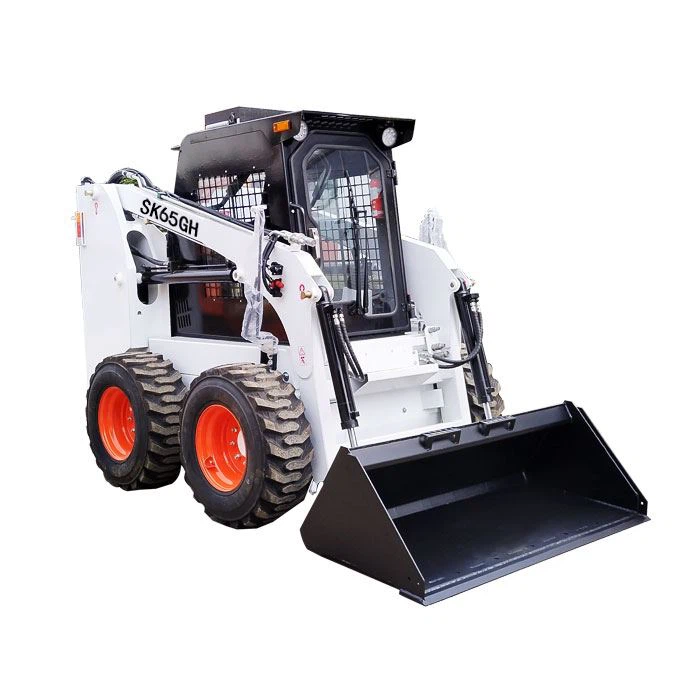

Tier 4 Interim: This was an intermediate step towards the even stricter Tier 4 Final standards. It introduced more advanced exhaust after - treatment technologies, such as diesel particulate filters (DPFs) and selective catalytic reduction (SCR) systems. DPFs are designed to trap and remove particulate matter from the exhaust, while SCR systems use a urea - based solution to reduce NOx emissions.
Tier 4 Final: These are the most stringent standards to date. Tier 4 Final engines have to meet extremely low emission limits for all major pollutants. Manufacturers have had to invest heavily in research and development to develop engines that can meet these requirements. Skidsteer loaders with Tier 4 Final engines are much cleaner and more environmentally friendly, but they also tend to be more complex and potentially more expensive.
European Emission Standards
In Europe, the emission standards for off - road engines are set by the European Union (EU). The EU's standards are similar to the EPA's in many ways, but they have their own naming convention. The equivalent of the EPA's Tier levels in Europe are the Stage levels. For example, Stage IIIA is roughly equivalent to Tier 3, and Stage IV is similar to Tier 4 Final.
How These Standards Affect Skidsteer Loader Owners
If you're in the market for a skidsteer loader, the emission standards can have several implications.
Cost
As mentioned earlier, more advanced emission - compliant engines tend to be more expensive. Tier 4 Final skidsteer loaders, for example, may have a higher upfront cost due to the advanced technology required to meet the strict emission limits. However, in the long run, these machines may also be more fuel - efficient, which can offset some of the initial cost.
Maintenance
Skidsteer loaders with advanced emission control systems require more maintenance. For instance, DPFs need to be periodically regenerated to remove the trapped particulate matter. This can involve either passive regeneration (which occurs automatically during normal operation) or active regeneration (which may require the operator to follow specific procedures). SCR systems also require the regular addition of diesel exhaust fluid (DEF), which is the urea - based solution used to reduce NOx emissions.
Performance
In some cases, the emission control systems can have a minor impact on the performance of the skidsteer loader. For example, during DPF regeneration, the engine may operate at a slightly different power level. However, manufacturers have worked hard to minimize these performance impacts, and in most cases, the difference is hardly noticeable during normal operation.
Our Skidsteer Loader Offerings
At our company, we offer a wide range of skidsteer loaders that comply with the latest emission standards. Whether you're looking for a Skid Loader Tracks for better traction on uneven terrain, a Wheeled Skid Steer for more maneuverability on hard surfaces, or a Small Skidsteer Loader for tight spaces, we've got you covered.
Our team of experts can help you choose the right skidsteer loader based on your specific needs, taking into account factors such as emission standards, performance requirements, and budget. We understand that every customer is different, and we're committed to providing the best solutions for your construction or landscaping projects.
Contact Us for Purchase and Consultation
If you're interested in learning more about our skidsteer loaders or have any questions about the emission standards, don't hesitate to reach out. We're here to assist you in making an informed decision. Whether you're a small contractor or a large construction company, we can work with you to find the perfect skidsteer loader for your operations.
References
- U.S. Environmental Protection Agency. (n.d.). Off - Road Diesel Engine Emission Standards.
- European Union. (n.d.). Emission Standards for Non - Road Mobile Machinery.


