

Hey there! As a digging excavator supplier, I often get asked about the differences between crawler and wheeled digging excavators. Well, let me break it down for you in a way that's easy to understand.
Mobility and Maneuverability
First off, let's talk about mobility. Crawler excavators are like the tanks of the construction world. They're built with tracks, which give them excellent traction on all sorts of terrains. Whether it's soft soil, muddy ground, or uneven surfaces, crawlers can move around with relative ease. The tracks distribute the machine's weight over a larger area, reducing the ground pressure and preventing it from sinking. This makes them ideal for jobsites where the ground conditions are less than perfect, like in mining operations or large - scale earthmoving projects.
On the other hand, wheeled excavators are more like sports cars in the construction fleet. They're designed with wheels, which allow them to move quickly on paved roads. If you need to transport the excavator from one job site to another over a long distance, a wheeled excavator can save you a lot of time and money. You don't have to load it onto a trailer and haul it around. It can simply drive itself to the new location.

In terms of maneuverability, crawler excavators have a wider turning radius because of their track system. However, they can pivot on the spot, which is really handy when you need to dig in tight spaces and change the direction of the boom without moving the whole machine. Wheeled excavators, though, have a smaller turning radius and can make sharper turns, which is great for working in urban areas or sites with limited space.
Stability
Stability is a crucial factor when it comes to excavators. Crawler excavators are extremely stable due to their low center of gravity and the wide base provided by the tracks. This stability allows them to handle heavy loads and perform deep digging operations. They can work on slopes without much risk of tipping over, making them suitable for projects on hilly or sloped terrains.
Wheeled excavators, while stable on flat and hard surfaces, are not as stable as crawlers on uneven or sloped ground. The wheels have a smaller contact area with the ground, which means they're more prone to tipping if the load is too heavy or if the machine is not positioned correctly. But modern wheeled excavators are equipped with outriggers that can be extended to increase stability when doing heavy - duty work.
Speed and Productivity
When it comes to speed, wheeled excavators have the upper hand. They can travel at speeds of up to 40 km/h on roads, while crawler excavators are much slower, usually moving at speeds of around 5 km/h. This makes wheeled excavators more efficient for jobs that require a lot of movement between different areas of a large site or for projects where the machine needs to be relocated frequently.
In terms of productivity, it depends on the type of work. For continuous digging and large - scale earthmoving, crawler excavators are more productive. Their stability and power allow them to dig deeper and lift heavier loads in a single operation. Wheeled excavators, however, are better for jobs that involve a lot of moving and quick set - up, like urban construction projects where you need to move from one spot to another and start digging right away.
Maintenance and Operating Costs
Maintenance is an important consideration for any construction equipment. Crawler excavators have more complex track systems that require regular maintenance. The tracks need to be inspected for wear and tear, and the tension needs to be adjusted periodically. The undercarriage components, such as sprockets and rollers, also need to be replaced more frequently compared to the wheels of a wheeled excavator.
Wheeled excavators, on the other hand, have a simpler wheel and tire system. Tires are easier to replace and maintain than tracks. However, if you're working on rough terrains, the tires can wear out quickly, and you may need to replace them more often.
In terms of operating costs, crawler excavators generally consume more fuel because of their heavier weight and the power required to move the tracks. Wheeled excavators are more fuel - efficient, especially when traveling on roads. But if you're using the wheeled excavator for heavy - duty digging, the fuel consumption may increase.
Attachments
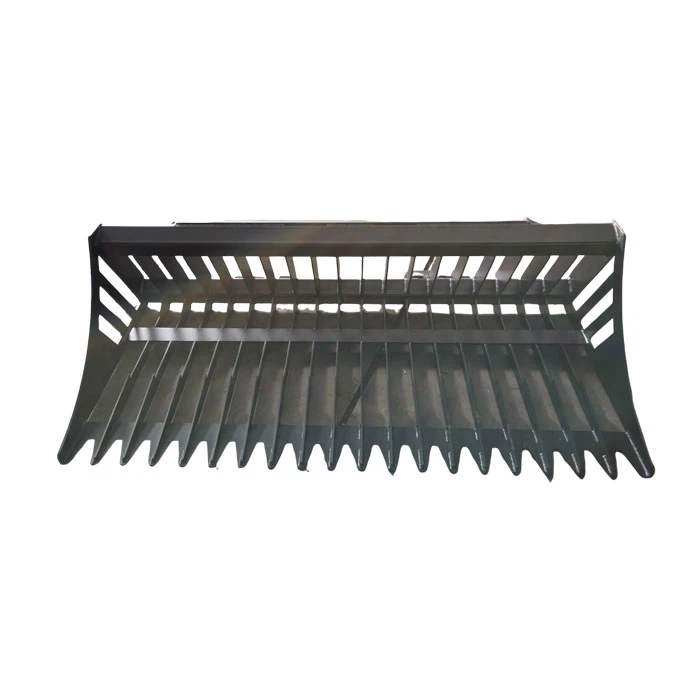
Both crawler and wheeled excavators can be equipped with a variety of attachments to increase their versatility. For example, you can attach a Rock Grapple Bucket to either type of excavator to handle rocks and debris. This attachment is great for clearing a site or sorting materials.
A Skid Steer Excavator Attachment can be used to transform the excavator into a more specialized digging machine. It can be adjusted to different angles and depths, allowing for more precise digging.
If you need to break concrete or other hard materials, a Skid Steer Concrete Breaker is a great option. It can be easily attached to the excavator's boom and used to break up tough surfaces.
Which One Should You Choose?
So, which type of excavator is right for you? Well, it depends on your specific needs. If you're working on large - scale projects in remote areas with poor ground conditions, a crawler excavator is probably the best choice. Its stability and power make it suitable for heavy - duty digging and earthmoving.
If you're working in urban areas or on projects that require a lot of travel between sites, a wheeled excavator might be more appropriate. Its speed and maneuverability will save you time and money.
As a digging excavator supplier, I can help you choose the right machine for your project. We have a wide range of crawler and wheeled excavators, as well as all the attachments you might need. Whether you're a small - scale contractor or a large construction company, we can provide you with the equipment that meets your requirements.
If you're interested in learning more about our products or want to discuss your project needs, don't hesitate to reach out. We're here to assist you in making the best decision for your business.
References
- Construction Equipment Handbook
- Excavator Manufacturer's Manuals
- Industry Reports on Construction Machinery


