

The ground clearance of a new skid steer loader is a crucial specification that significantly impacts its performance in various work environments. As a supplier of new skid steer loaders, I've witnessed firsthand how this seemingly small detail can make a big difference in the machine's functionality and suitability for different tasks.
Understanding Ground Clearance
Ground clearance refers to the vertical distance between the lowest point of the skid steer loader (usually the underside of the chassis) and the ground surface. It is an essential measurement because it determines the loader's ability to navigate over obstacles, uneven terrain, and debris without getting stuck or causing damage to the machine.
A higher ground clearance allows the skid steer loader to easily pass over rocks, logs, and other obstacles commonly found on construction sites, agricultural fields, and landscaping projects. This means less time spent maneuvering around obstacles and more time spent on productive work. On the other hand, a lower ground clearance may limit the loader's mobility in rough terrain and increase the risk of damage to the machine's undercarriage.
Factors Affecting Ground Clearance
Several factors can influence the ground clearance of a skid steer loader. These include the type of loader (wheeled or tracked), the size of the tires or tracks, and the design of the chassis.
Type of Loader
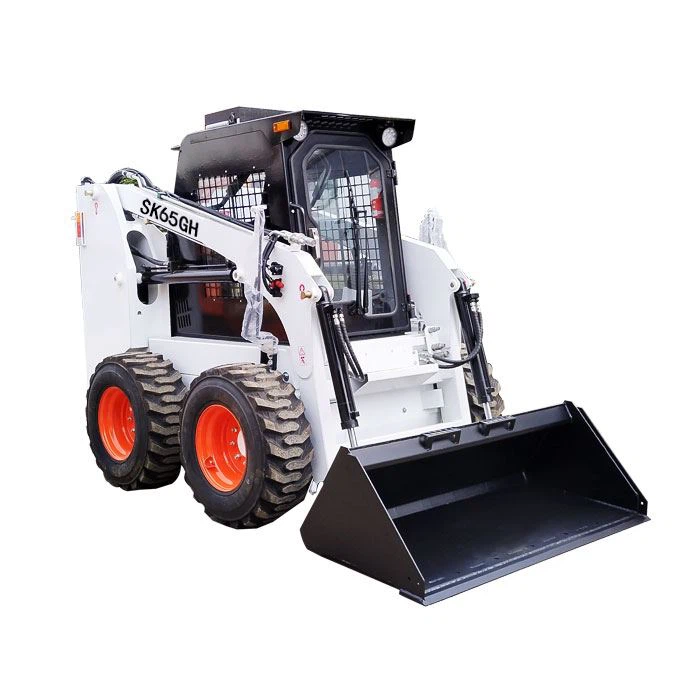
There are two main types of skid steer loaders: wheeled and tracked. Wheeled skid steer loaders typically have a higher ground clearance than tracked loaders. This is because the wheels provide a more elevated base for the machine, allowing it to clear obstacles more easily. Wheeled skid steer loaders are ideal for applications on hard, flat surfaces such as concrete or asphalt. You can explore our range of Wheeled Skid Steer models to see the differences in ground clearance and other features.
Tracked skid steer loaders, also known as Crawler Skid Steer Loader, have a lower ground clearance but offer better traction and stability on soft or uneven terrain. The tracks distribute the weight of the machine more evenly, reducing the risk of sinking or getting stuck. However, the lower ground clearance may limit their ability to pass over large obstacles.
Size of Tires or Tracks
The size of the tires or tracks on a skid steer loader can also affect its ground clearance. Larger tires or tracks generally provide a higher ground clearance, as they elevate the machine further off the ground. When choosing a skid steer loader, it's important to consider the size of the tires or tracks based on the type of terrain you'll be working on.
Chassis Design
The design of the chassis plays a significant role in determining the ground clearance of a skid steer loader. Some loaders are designed with a more streamlined chassis, which reduces the overall height of the machine and may result in a lower ground clearance. Other loaders have a more robust chassis design, which provides additional protection and may increase the ground clearance.
Importance of Ground Clearance in Different Applications
The ground clearance of a skid steer loader is particularly important in certain applications. Here are a few examples:
Construction Sites
Construction sites are often filled with debris, rocks, and uneven terrain. A skid steer loader with a high ground clearance can easily navigate these obstacles, allowing for more efficient operation. It can also access areas that may be difficult to reach with other equipment, such as tight spaces or areas with limited access.
Agricultural Fields
In agricultural applications, skid steer loaders are used for tasks such as moving hay bales, clearing fields, and loading and unloading equipment. A high ground clearance is essential to prevent damage to the machine when working in fields with uneven ground or large obstacles.

Landscaping Projects
Landscaping projects often involve working on soft or uneven terrain, such as gardens, parks, or golf courses. A skid steer loader with a suitable ground clearance can move around these areas without causing damage to the grass or soil. It can also handle tasks such as digging, grading, and moving materials with ease.
Choosing the Right Ground Clearance for Your Needs
When choosing a skid steer loader, it's important to consider the ground clearance based on your specific needs and the type of work you'll be doing. Here are some tips to help you make the right decision:
Evaluate the Terrain
Assess the type of terrain you'll be working on regularly. If you'll be working on hard, flat surfaces, a wheeled skid steer loader with a high ground clearance may be suitable. If you'll be working on soft or uneven terrain, a tracked skid steer loader may be a better option, even though it may have a lower ground clearance.
Consider the Obstacles
Think about the size and type of obstacles you'll encounter on the job. If you'll be working in an area with large rocks, logs, or other obstacles, a skid steer loader with a higher ground clearance will be more effective.
Balance with Other Features
While ground clearance is an important factor, it's also essential to consider other features of the skid steer loader, such as its lifting capacity, horsepower, and maneuverability. A loader with a high ground clearance may not be the best choice if it lacks the power or capacity to perform the tasks you need.
Our Range of Skid Steer Loaders
As a supplier of new skid steer loaders, we offer a wide range of models with different ground clearances to meet the diverse needs of our customers. Our Large Skidsteer Loader models are designed for heavy-duty applications and often feature a higher ground clearance to handle tough terrain.
Whether you're a contractor, farmer, landscaper, or DIY enthusiast, we have the right skid steer loader for you. Our team of experts can help you choose the model with the appropriate ground clearance based on your specific requirements.
Contact Us for More Information
If you're interested in learning more about the ground clearance of our skid steer loaders or have any other questions, please don't hesitate to contact us. We're here to provide you with the information you need to make an informed decision and find the perfect skid steer loader for your needs. Let's start a conversation about how our skid steer loaders can enhance your productivity and efficiency on the job.
References
- "Skid Steer Loader Basics," Construction Equipment Guide.
- "Understanding Skid Steer Loader Specifications," Equipment World.


