

As a supplier of Wheeled Skid Steers, I've spent a great deal of time exploring and understanding the various aspects of these remarkable machines. One of the most critical factors that determines the performance and usability of a Wheeled Skid Steer is its stability. In this blog, I'll delve into what stability means for a Wheeled Skid Steer, why it's so important, and how we ensure our products offer the best stability in the market.
Understanding the Concept of Stability in Wheeled Skid Steers
Stability is the ability of a Wheeled Skid Steer to resist tipping over during operation. It is a complex interplay of several factors, including the machine's design, weight distribution, tire characteristics, and the nature of the terrain on which it operates.
The design of a Wheeled Skid Steer plays a fundamental role in its stability. A well - designed skid steer will have a low center of gravity. The center of gravity is the point at which the entire weight of the machine can be considered to act. When the center of gravity is low, the machine is less likely to tip over. For example, our Wheeled Skid Steers are engineered with a compact and low - slung body. This design not only gives the operator better visibility but also keeps the center of gravity close to the ground, enhancing stability.
Weight distribution is another crucial aspect. A balanced weight distribution across the wheels ensures that each wheel bears an appropriate amount of load. If the weight is concentrated on one side or at the front or rear of the machine, it can lead to instability. Our engineers carefully calculate and adjust the weight distribution during the manufacturing process to ensure that the Wheeled Skid Steer remains stable under various working conditions.
Tire characteristics also have a significant impact on stability. The type, size, and tread pattern of the tires can affect the machine's grip on the ground. For instance, tires with a deep tread pattern provide better traction, especially on uneven or slippery surfaces. We offer a range of tire options for our Wheeled Skid Steers, allowing customers to choose the tires that best suit their specific operating conditions.
Importance of Stability in Wheeled Skid Steers
The stability of a Wheeled Skid Steer is of utmost importance for several reasons. Firstly, it is a matter of safety. An unstable skid steer can tip over, which can cause serious injuries to the operator and damage to the machine. By ensuring high stability, we prioritize the safety of our customers.
Secondly, stability affects the efficiency of the machine. A stable skid steer can operate more smoothly and precisely. It can lift and carry heavy loads without the risk of tipping, allowing for more productive work. For example, when using a Wheeled Skid Steer for material handling, a stable machine can move large amounts of materials quickly and safely, reducing downtime and increasing overall productivity.

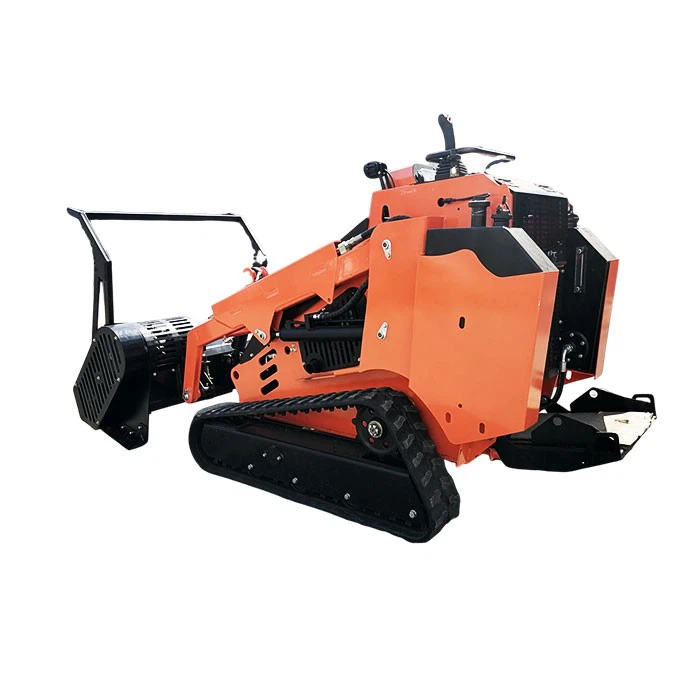
In addition, stability also impacts the lifespan of the machine. An unstable skid steer is more likely to experience excessive wear and tear on its components due to the uneven forces acting on it. By maintaining stability, we help our customers extend the service life of their Wheeled Skid Steers, reducing maintenance costs and increasing the return on investment.
Factors Affecting the Stability of Wheeled Skid Steers
Terrain Conditions
The type of terrain on which a Wheeled Skid Steer operates has a major impact on its stability. On flat and even surfaces, the machine is generally more stable. However, when working on slopes, uneven ground, or soft soil, the stability can be significantly compromised.
When operating on slopes, the machine's center of gravity shifts, increasing the risk of tipping. Our Wheeled Skid Steers are equipped with features such as anti - roll bars and advanced traction control systems to help maintain stability on slopes. These systems work by adjusting the power distribution to the wheels and providing additional support to prevent the machine from rolling over.
On soft soil, the tires can sink, causing the machine to become unstable. To address this issue, we offer Skid Loader Tracks as an option. These tracks distribute the weight of the machine over a larger area, reducing the ground pressure and improving stability on soft surfaces.
Load Capacity and Distribution
The load capacity of a Wheeled Skid Steer is another important factor. Overloading the machine can significantly reduce its stability. It is essential to ensure that the load is within the rated capacity of the skid steer.
Moreover, the way the load is distributed on the machine also affects stability. A load that is placed too far forward or to one side can cause the machine to become unbalanced. Our operators' manuals provide clear guidelines on how to properly load the machine to maintain stability.
How We Ensure the Stability of Our Wheeled Skid Steers
As a supplier, we take several steps to ensure the stability of our Wheeled Skid Steers. Firstly, we use high - quality materials in the construction of the machines. Strong and durable frames and components help to maintain the structural integrity of the skid steer, which is essential for stability.
We also conduct extensive testing during the development process. Our engineers test the skid steers under various conditions, including different terrains and load scenarios. This allows us to identify and address any potential stability issues before the machines are released to the market.
In addition, we offer a range of accessories and options that can enhance the stability of the Wheeled Skid Steers. For example, Rubber Tracks For Skid Steer can be used to improve traction and stability on different surfaces. These tracks are made of high - quality rubber and are designed to provide excellent grip and durability.
We also provide comprehensive training to our customers on how to operate the Wheeled Skid Steers safely and efficiently. Proper operation is crucial for maintaining stability, and our training programs cover topics such as load management, terrain awareness, and machine control.
The Role of Mini Skid Tracks in Stability
Mini skid steers are becoming increasingly popular due to their compact size and versatility. Mini Skid Tracks play an important role in enhancing the stability of these machines.
Mini Skid Tracks offer several advantages over traditional wheels. They provide better traction on soft and uneven surfaces, reducing the risk of slippage and improving stability. The tracks also distribute the weight of the machine more evenly, which helps to prevent the machine from sinking into the ground.
In addition, Mini Skid Tracks can be easily installed and removed, allowing operators to switch between tracks and wheels depending on the specific job requirements. This flexibility makes mini skid steers even more versatile and stable in different working environments.
Conclusion
In conclusion, the stability of a Wheeled Skid Steer is a complex and critical aspect of its performance. It is determined by a combination of factors, including design, weight distribution, tire characteristics, terrain conditions, and load management.
As a supplier, we are committed to providing our customers with Wheeled Skid Steers that offer the highest level of stability. We use advanced engineering techniques, high - quality materials, and rigorous testing to ensure that our machines are safe, efficient, and reliable.
If you are in the market for a Wheeled Skid Steer and are looking for a stable and high - performance machine, we invite you to contact us for a detailed discussion. Our team of experts is ready to help you choose the right skid steer for your specific needs and provide you with the support and service you deserve.
References
- "Skid Steer Operator's Manual", Industry Standard Publications
- "Engineering Principles of Construction Equipment", McGraw - Hill Education


