

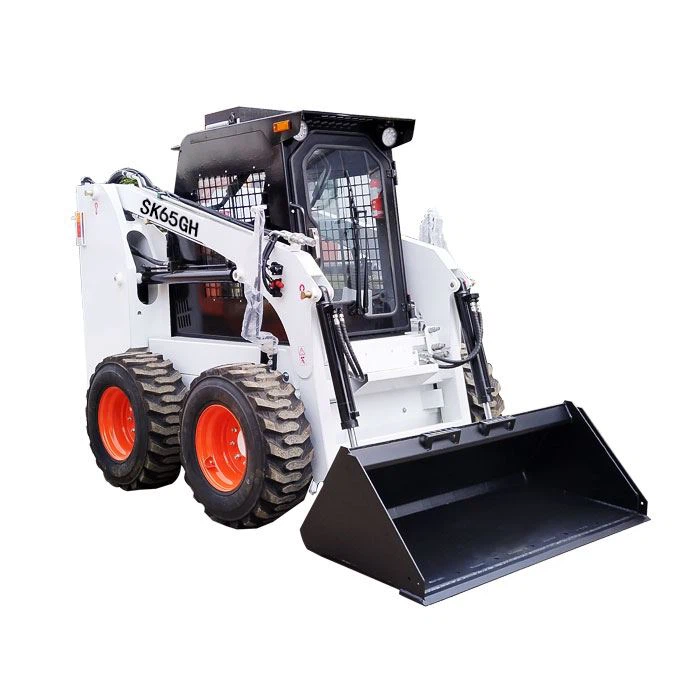
Skid-steer loaders are incredibly versatile machines, widely used in construction, landscaping, agriculture, and various other industries. As a supplier of small skid-steer loaders, I've witnessed firsthand the importance of understanding the steering mechanism of these compact yet powerful machines. In this blog post, I'll delve into the details of what makes the steering mechanism of a small skid-steer loader tick.
The Basics of Skid-Steer Steering
At its core, the steering mechanism of a skid-steer loader is fundamentally different from that of a traditional vehicle. Instead of using a steering wheel to turn the front wheels, skid-steer loaders rely on a skid-steering system. This system allows the machine to turn by varying the speed and direction of the wheels or tracks on either side of the loader.
How Skid Steering Works
Skid steering operates on the principle of differential speed between the left and right sides of the loader. When the operator wants to turn, they increase the speed of the wheels or tracks on one side while decreasing or reversing the speed on the other side. This creates a difference in the traction force between the two sides, causing the loader to pivot around the slower or stationary side.
For example, if the operator wants to turn left, they would slow down or reverse the wheels on the left side while increasing the speed of the wheels on the right side. This differential speed creates a turning force that rotates the loader to the left. The same principle applies when turning right, with the roles of the left and right sides reversed.
Components of the Steering Mechanism
The steering mechanism of a small skid-steer loader consists of several key components that work together to enable precise and efficient steering. These components include:
Hydraulic System
The hydraulic system is the heart of the steering mechanism in a skid-steer loader. It provides the power necessary to control the movement of the wheels or tracks. The hydraulic system consists of a hydraulic pump, hydraulic cylinders, and control valves.
The hydraulic pump is responsible for generating the hydraulic pressure needed to operate the steering system. It draws hydraulic fluid from a reservoir and pressurizes it before sending it to the hydraulic cylinders. The hydraulic cylinders are connected to the wheels or tracks and use the hydraulic pressure to move them. The control valves regulate the flow of hydraulic fluid to the cylinders, allowing the operator to control the speed and direction of the wheels or tracks.
Drive System
The drive system is another important component of the steering mechanism. It transfers the power from the engine to the wheels or tracks. There are two main types of drive systems used in skid-steer loaders: wheeled and tracked.
- Wheeled Skid Steer: Wheeled Skid Steer loaders use a traditional wheel drive system. The engine powers a transmission, which transfers the power to the wheels through axles. The wheels are typically equipped with tires that provide traction on various surfaces.
- Tracked Skid Steer: Best Track Skid Steer loaders use a track drive system. The engine powers a hydraulic motor, which drives the tracks. The tracks provide better traction and stability on soft or uneven terrain compared to wheels.
Control Levers
The control levers are the interface between the operator and the steering mechanism. They allow the operator to control the speed and direction of the wheels or tracks. Most skid-steer loaders are equipped with two control levers, one for each side of the loader.
The left control lever controls the speed and direction of the left wheels or tracks, while the right control lever controls the speed and direction of the right wheels or tracks. By moving the control levers forward or backward, the operator can increase or decrease the speed of the wheels or tracks. By moving the control levers to the left or right, the operator can turn the loader in the desired direction.
Advantages of Skid-Steer Steering
The skid-steering system offers several advantages over traditional steering systems, making it well-suited for a variety of applications. Some of the key advantages include:
Maneuverability
Skid-steer loaders are known for their exceptional maneuverability. The ability to turn in a tight radius allows them to operate in confined spaces where larger vehicles would have difficulty maneuvering. This makes them ideal for use in construction sites, warehouses, and other areas with limited space.
Versatility
Skid-steer loaders can be equipped with a wide range of attachments, such as buckets, forks, grapples, and augers. The skid-steering system allows the loader to easily switch between different attachments and perform a variety of tasks. This versatility makes skid-steer loaders a valuable asset in many industries.
Traction
The skid-steering system provides excellent traction on various surfaces. The differential speed between the left and right sides of the loader allows it to maintain traction even on slippery or uneven terrain. This makes skid-steer loaders suitable for use in a wide range of environments, including construction sites, agricultural fields, and snow removal operations.
Maintenance and Troubleshooting
Proper maintenance of the steering mechanism is essential to ensure the safe and efficient operation of a small skid-steer loader. Here are some tips for maintaining the steering mechanism:

- Regular Inspections: Perform regular inspections of the hydraulic system, drive system, and control levers to check for any signs of wear or damage. Replace any worn or damaged components as needed.
- Fluid Checks: Check the hydraulic fluid level regularly and top it up if necessary. Use the recommended hydraulic fluid for your skid-steer loader.
- Lubrication: Lubricate the moving parts of the steering mechanism, such as the control levers and hydraulic cylinders, according to the manufacturer's recommendations.
- Troubleshooting: If you experience any problems with the steering mechanism, such as difficulty turning or loss of control, stop using the loader immediately and have it inspected by a qualified technician.
Conclusion
The steering mechanism of a small skid-steer loader is a complex yet essential component that allows these machines to perform a wide range of tasks with precision and efficiency. By understanding how the steering mechanism works and following proper maintenance procedures, you can ensure the safe and reliable operation of your skid-steer loader.
If you're in the market for a small skid-steer loader, I encourage you to explore our range of Skid Steer Machine options. Our skid-steer loaders are designed to meet the needs of various industries and applications, offering exceptional performance, reliability, and versatility. Contact us today to learn more about our products and discuss your specific requirements. We look forward to helping you find the perfect skid-steer loader for your business.
References
- Manufacturer's manuals for skid-steer loaders
- Industry publications on construction equipment
- Technical articles on skid-steer steering mechanisms


