Step 1: Start with "What Are You Handling?" and Choose the Grapple Type
This is the most important starting point. Grapple attachments are designed to handle different types of materials and solve specific material-handling challenges.
If your job involves land clearing, such as removing tree roots and brush or clearing rocks and debris, an open-bottom grapple is usually the best choice. Its bottom is made up of several parallel tines. This design allows you to grab large debris while letting loose soil, sand, and small rocks fall through. It improves productivity while reducing the unnecessary weight carried in the grapple.
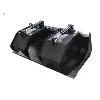
If you work in demolition or scrap handling, such as moving broken concrete, bricks, or metal debris, you will need a closed-bottom grapple. It works much like a bucket with large gripping jaws. Since demolition materials can be both heavy and irregularly shaped, the enclosed bottom helps contain the load and prevents debris from falling out during lifting or transport.
For landscaping, farm work, or general property maintenance, where you may handle branches, brush, hay, and miscellaneous debris, you have more flexibility. A general-purpose grapple, with a design between open and closed styles, can handle most routine jobs. If you mainly handle long, round logs, however, a log grapple with jaws specifically shaped to conform to the load will provide a more secure grip and better stability.
Step 2: Check for the "Too Much Attachment for the Carrier" Problem
In many cases, an attachment doesn't work as expected not because the grapple itself is poorly designed, but because the skid steer simply cannot provide enough power or lifting capacity. There are two key areas to check.
Match the hydraulic system. Your skid steer loader has a specific hydraulic flow and pressure range, while the grapple attachment has its own operating requirements. If the carrier does not provide enough hydraulic power, the grapple jaws may close slowly and lack sufficient gripping force, making heavy-duty work difficult. If the hydraulic requirements exceed the carrier's capabilities, the machine's hydraulic system may be damaged. Think of it like matching the right fuel specification to an engine-the requirements need to be compatible.
Leave enough lifting capacity for safe operation. This is especially important because the grapple itself adds considerable weight to the machine and reduces the remaining lifting capacity. A skid steer's rated operating capacity indicates how much load it can safely handle under specified operating conditions. Therefore, don't look only at how much material the grapple can hold. Make sure the grapple's own weight leaves enough capacity for the actual load you intend to lift and handle.
Step 3: Look at the "Structure" and the "Working Joints"
These details determine how long the attachment will last and how smoothly it will perform in demanding applications.
Check whether the frame is built tough enough. High-quality grapples typically use thicker, high-strength steel in critical structural areas. Pay particular attention to the thickness of the steel plates in high-load sections and the quality of the welds. Consistent, full welds indicate good manufacturing quality and help reduce the risk of cracking or weld failure under heavy loads.
Check whether the "teeth" are designed for your material. On an open-bottom grapple, narrower tine spacing makes it easier to hold smaller materials, but it also allows less soil and gravel to fall through. Wider spacing improves material screening but may allow small branches to slip out. The right spacing depends on the size and type of material you handle. Tine shape also matters: square tines generally resist bending better than round tines, while replaceable tine tips can significantly reduce long-term maintenance costs.
Check the flexibility of the "joints." Grapples are available with single- or dual-jaw configurations. A dual-jaw design provides a more secure grip when handling round, elongated materials such as logs. If you need to precisely position and stack logs, a hydraulic rotation function can make the job much easier by allowing you to adjust the grapple angle without constantly repositioning the entire skid steer.